
The seminar series connects frontier research with practical collaboration across universities, research labs, and industry partners.
Overview
Program intent
The seminar series invites speakers from academia and industry to discuss physical AI, autonomy, world models, and intelligent transportation. As part of DriveX, these events support technical exchange, partnership building, and community growth.
Schedule
Cadence
During the academic year, seminars are typically scheduled every 6-8 weeks, with cadence adjusted to speaker availability, conference calendars, and program priorities.
Calendar
Recent seminar talks
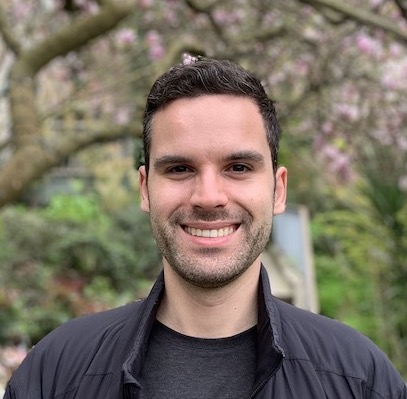
Accelerating the Development and Deployment of Reasoning Autonomous Vehicles with Alpamayo
Boris Ivanovic — Senior Research Scientist and Manager, NVIDIA Autonomous Vehicle Research Group
Engineering Bldg VI, Mong Auditorium
Abstract
Foundation models are driving a new generation of Physical AI systems that integrate perception, reasoning, and action. In autonomous driving, this shift is giving rise to Reasoning Vision-Language-Action (VLA) models that unify semantic understanding and control. This talk will focus on the design of Alpamayo, a reasoning-centric VLA architecture for autonomous vehicles, including efficient vision tokenization strategies, action representations, and mechanisms for multimodal reasoning. I will also discuss training paradigms for eliciting reasoning capabilities in VLA models and briefly highlight how foundation models accelerate the overall AV development flywheel, enabling new capabilities such as synthetic data generation and accelerated safety validation via simulation.
Biography
Boris Ivanovic is a Senior Research Scientist and Manager in NVIDIA’s Autonomous Vehicle Research Group. His research interests include novel end-to-end AV architectures, policy training strategies, AI safety, and the thoughtful integration of foundation models in AV development. Prior to joining NVIDIA, he received his Ph.D. in Aeronautics and Astronautics in 2021 and an M.S. in Computer Science in 2018, both from Stanford University. He received his B.A.Sc. in Engineering Science from the University of Toronto in 2016.
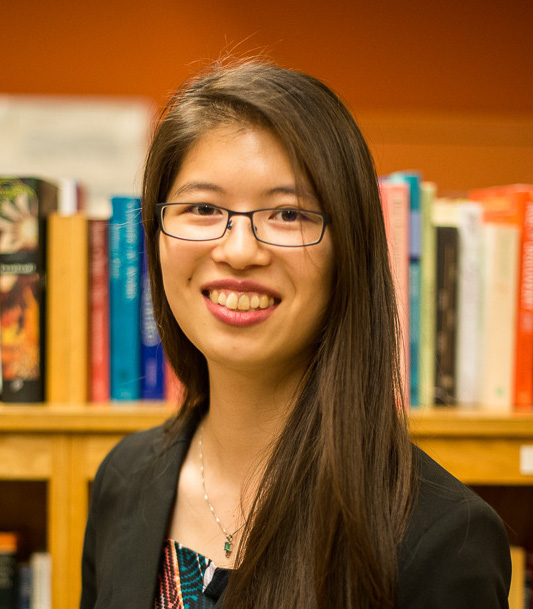
Tackling the Long Tail of Transportation Optimization with Machine Learning
Cathy Wu — Class of 1954 Career Development Professor and Associate Professor, MIT
Engineering Bldg VI, Mong Auditorium
Abstract
Before changing a bus network, signal timing plan, or autonomy deployment, decision-makers must compare relevant counterfactuals. However, such counterfactual questions induce a long tail of difficult optimization problems for which traditional approaches are prohibitively costly—requiring years of solver development, lengthy solve times, or both. My research asks: How can AI lower the cost of solving transportation optimization problems? In principle, deep reinforcement learning (RL) can be used to solve arbitrary optimization problems. However, RL is far from mature; our work exposes fundamental limitations in current methods: brittleness to even small changes, like network structure or demand. In response, I take two broad approaches: First is to address non-robustness in deep RL: I will present a Bayesian approach that trains an ensemble of RL models to solve contextual control problems with up to 30x improved sample efficiency. Second is to understand how to use AI in conjunction with classical optimization techniques: I will show how AI can help identify and eliminate unproductive decisions within combinatorial optimization solvers, leading to 2–10x faster solve times. Finally, we inform transportation policy by tackling an open optimization problem: we produce the first prospective impact assessment of city-scale eco-driving, showing that optimizing vehicle speeds at intersections can significantly improve energy efficiency without sacrificing throughput or safety. Together, these approaches suggest a principled “middle road” between pure RL and pure classical optimization for scalable decision-making across transportation, logistics, and beyond.
Biography
Cathy Wu is the Class of 1954 Career Development Professor at MIT, holding appointments in LIDS, CEE, and IDSS. She holds a Ph.D. in EECS from UC Berkeley, and B.S. and M.Eng. in EECS from MIT, and completed a Postdoc at Microsoft Research. Her research group studies machine learning for optimization, with a focus on transportation. She is broadly interested in enabling faster, evidence-driven decisions for sociotechnical systems. Cathy is the recipient of the NSF CAREER (2023), the Ole Madsen Mentoring Award (2025), the IEEE ITS Best Dissertation Award (2019), and the CUTC Milton Pikarsky Memorial Award (2018). She serves on the Board of Governors for the IEEE ITSS, is an Associate Editor or Area Chair for ICML, NeurIPS, ICRA, Transportation Research Part C, and Operations Research, and served as Program Co-chair for RLC 2025. She is also the inaugural Chair and Co-founder of the REproducible Research In Transportation Engineering (RERITE) Working Group.
Motional — industry-facing UCLA visit
Planned as a public seminar with an optional technical discussion session for active collaborators.